AI in Cybersecurity Education
Faculty Development Summer Institute 2026
Guest Speaker: Malihe Alikhani
[slides]
This morning session focuses on AI alignment as a sociotechnical and institutional relation rather than a purely technical property.
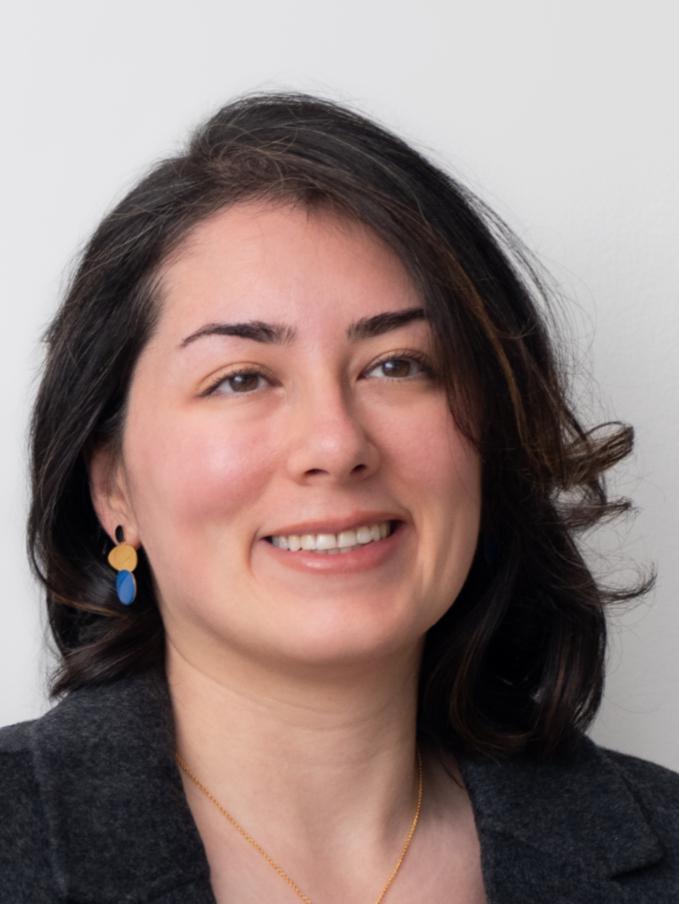
Malihe Alikhani
Assistant Professor of Computer Science, Khoury College of Computer Sciences, Northeastern University
Dr. Malihe Alikhani is an Assistant Professor at Northeastern University, where she focuses on Natural Language Processing (NLP), AI ethics, discourse and dialogue, and the development of inclusive and equitable AI systems. Her research bridges machine learning, cognitive science, and social sciences to build communicative systems that are safe, fair, and effective. Previously, she was an Assistant Professor in the Department of Computer Science at the University of Pittsburgh and a visiting fellow with the Center on Regulation and Markets at the Brookings Institution. She earned her Ph.D. in Computer Science and a Graduate Certificate in Cognitive Science from Rutgers University.
The Alignment Gap: When AI Agrees Too Much and Institutions Assume Too Little
Abstract:
What does it mean for an AI system to be aligned, and aligned with whom? In this talk, I treat alignment not as a fixed technical property, but as a relation among models, users, tasks, and institutions. I begin with my work on uncertainty and sycophancy in language models, showing how alignment to user intent can collapse into over agreement, misplaced confidence, and reduced epistemic resilience. I then connect these dynamics to AI assisted code generation and productivity, where fast answers are not always useful answers, and where positive friction can help systems clarify assumptions before errors become costly. Finally, I turn to distributional alignment and DPO based methods, arguing that alignment should preserve meaningful variation in human judgment rather than flattening it into a single average preference. I close with brief policy reflections on why institutions should not assume alignment simply because AI systems are fluent, useful, or widely adopted.
Resources
- “Accounting for Sycophancy in Language Model Uncertainty Estimation” — Anthony Sicilia, Mert Inan, Malihe Alikhani, Findings of NAACL 2025. ACL Anthology
- “Better Slow than Sorry: Introducing Positive Friction for Reliable Dialogue Systems” — Mert İnan, Anthony Sicilia, Suvodip Dey, Vardhan Dongre, Tejas Srinivasan, Jesse Thomason, Gökhan Tür, Dilek Hakkani-Tür, Malihe Alikhani, arXiv preprint 2025. arXiv
- “MixDPO: Modeling Preference Strength for Pluralistic Alignment” — Saki Imai, Pedram Heydari, Anthony Sicilia, Asteria Kaeberlein, Katherine Atwell, Malihe Alikhani, arXiv preprint 2026. arXiv
- “Identifying & Interactively Refining Ambiguous User Goals for Data Visualization Code Generation” — Mert Inan, Anthony Sicilia, Alex Xie, Saujas Vaduguru, Daniel Fried, Malihe Alikhani, EMNLP 2025. ACL Anthology
- “Breaking the AI Mirror” — Malihe Alikhani, Brookings Institution 2025. Brookings
- “How are Americans using AI? Evidence from a nationwide survey” — Ben Harris, Malihe Alikhani, Sanjay Patnaik, Brookings Institution 2025. Brookings